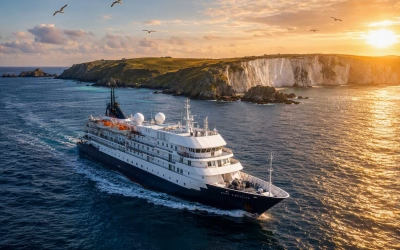
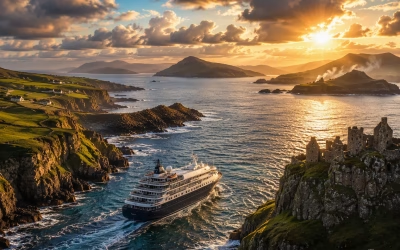
British Isles by Sea: A Slow Odyssey from Portsmouth to Oban – KRC British Odessey Site Inspection Cruise
By Malcolm Green
There’s a special kind of magic in letting the sea do the stitching—turning separate islands and cities into one continuous story, port by port. On this voyage through the British Isles, I came for the coastal drama and the slow-travel calm, but what stayed with me most were the layers: communities that welcome you in, histories that don’t let you look away, and landscapes so beautiful they make the past feel even closer.
I boarded in Portsmouth with that particular kind of excitement you only get at a harbor—salt in the air, gulls overhead, and the sense that anything could be waiting just beyond the breakwater. As the ship eased away, I watched the outlines of old naval docks and historic vessels blur into the haze and thought about how many departures this city has witnessed. Fleets, explorers, merchants—Portsmouth has long been a launchpad for people chasing horizons. My version was gentler, sure, but it felt good to start somewhere built for setting off.
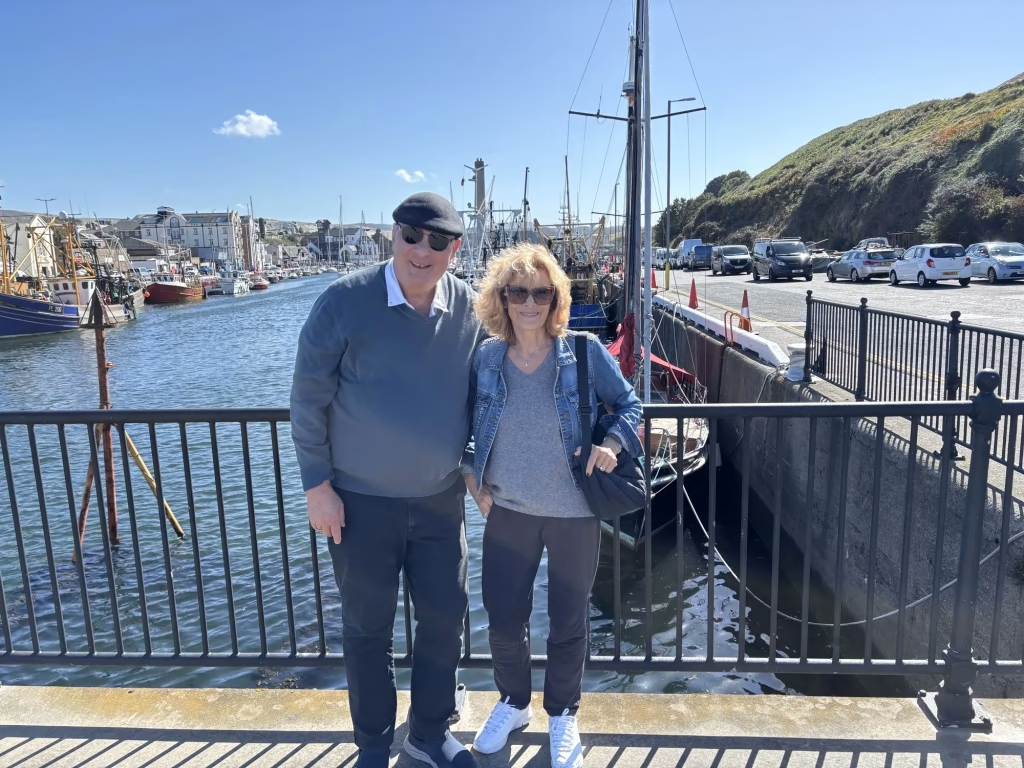
Out along the English coast, the chalk cliffs rose and fell like pale sentries in the distance. Ship time has its own rhythm—tea, sea, sky, repeat—and somewhere between the steady thrum of the engines and the long line of horizon, I could feel the trip gently click into place.
Our first stop was Guernsey, where postcard-pretty lanes come with a complicated undertow. Granite cottages and thick hedgerows make the island feel cozy—until you start noticing the wartime markers. The German Occupation Museum is small but heavy in the best way: it pulls you into the daily realities of those years and makes the history feel immediate. I couldn’t stop thinking about people who passed through places like this looking for safety, including Jewish refugees trying to outrun what was happening on the continent. Afterward, I walked the shoreline and let the wind do what it does best—scrub the mind clean, without erasing what matters.
From there we slipped into the kind of islands that make you believe time can slow down: Sark, then St. Mary’s in the Isles of Scilly. Sark’s car-free quiet feels almost unreal—just wheels on gravel, footsteps, and the occasional burst of birdsong. St. Mary’s was all rugged edges and impossible color: cliffs dropping into turquoise coves, wildflowers in the fields, seabirds sketching loops in the sky. There wasn’t a specific heritage site on my list here, and that was the point. These were the stops that reminded me travel isn’t only about what you “see”—it’s also about what you finally have room to feel.
Next came Waterford, washed in soft Irish rain that turned the city into a palette of silvers and greens. As Ireland’s oldest city, it wears its Viking roots proudly, but my mind kept drifting toward another thread of history—the small, resilient Jewish community that once flourished in Dublin. At the Waterford Crystal factory, the craftsmanship was hypnotic: heat, breath, patience, and suddenly a shape catches the light like it’s holding a piece of the sea inside it.
Dublin was the emotional center of the voyage for me. I spent Shabbat with the Dublin Hebrew Congregation in Terenure, and the welcome was immediate—the kind that makes a new city feel familiar in an hour. There’s something grounding about stepping into a rhythm that’s bigger than travel logistics: prayers, conversation, shared meals, and the quiet sense of being held by tradition, even far from home.
After Shabbat, I went to the Irish Jewish Museum, tucked inside a former synagogue on Walworth Road. It’s modest, intimate, and quietly powerful—photos, objects, and family stories that make Jewish life in Ireland feel personal rather than abstract. Then Dublin did what Dublin does: Trinity College and the Book of Kells, music spilling onto the streets around Temple Bar, and an evening walk along the River Liffey as the city lights turned the water into a ribbon of glass.
Belfast felt like a different tempo—industrial, artistic, and fiercely forward-looking. Jewish history is less visible at first glance, but it’s there: the active synagogue on Somerton Road is a steady, understated marker of continuity. In between, I took in the Titanic Quarter (equal parts ingenuity and tragedy) and the city’s murals, which read like an open-air archive of conflict, identity, and the long work of peace.
In Douglas on the Isle of Man, the Victorian promenade looks made for slow strolling—curving shoreline, elegant façades, that old-fashioned seaside charm. But the island also carries a sobering World War II story: internment camps held civilians here, including Jewish refugees and artists. Walking the same waterfront, I kept picturing the dissonance of that setting—beauty on one side, uncertainty on the other—and felt an unexpected hush settle over the day.
And then Scotland—wilder, saltier, more elemental with every mile north. Islay and Jura smelled like peat smoke and ocean spray, and the distilleries made it easy to understand why people become lifelong devotees. Lagavulin, Laphroaig, Jura—each tasting felt like drinking the landscape: briny, earthy, warming. Inside the tasting rooms, laughter bounced between wooden tables and clinking glasses, the kind of easy camaraderie that travels well.
Staffa was pure wonder. Fingal’s Cave rises like a basalt cathedral—perfect columns, black stone, and waves that echo through the chamber as if the island is humming. Nearby, Iona offered the opposite kind of drama: soft light, quiet paths, and abbey ruins that seem to hold centuries in their stones. It’s the sort of place that makes you speak a little lower without meaning to.
When we docked in Oban, I did the thing I always do at the end of a good trip: I stayed put a little longer. One last look at the water. One last deep breath of sea air. This voyage was more than a string of ports—it was a slow weave of landscapes and histories, bright moments and heavy ones, quiet museums and loud pubs, wind-carved cliffs and warm community tables.
If there was a theme, it was connection—how islands can feel remote and yet hold the most intertwined stories. I arrived expecting scenery (and yes, the scenery delivered). I left with something better: a deeper sense of how place, memory, and culture travel together—quietly, persistently—across the water.

Malcolm Green comes from three generations of caterers and has spent his life running kosher hotels, catering companies, destination weddings, and more than 70 glatt-kosher cruises around the world. Having absorbed global cuisines throughout his travels, he brings that experience into every menu he creates. Today, he oversees our kosher menu planning and food logistics, with all meals freshly prepared in our onboard kosher kitchens.