Tykocin is in northeastern Poland. It offers a vivid glimpse into early modern Jewish life. Today, the 17th-century synagogue is a restored museum. It reminds us of a vibrant community that influenced Jewish scholarship, commerce, and culture for centuries.
Discover a Meaningful Jewish Journey with Kosher Riverboat Cruises
Join us for a unique adventure that blends history, culture, and comfort. Discover our carefully designed kosher tours. Explore amazing places and deepen your understanding of Jewish heritage. You can do this all from the comfort of a luxury riverboat. Savor amazing kosher food, uplifting daily services, and guided explorations. Each moment becomes truly memorable. Transform your next Jewish vacation into a journey of time and tradition.
When and Why Did Jews First Settle in Tykocin?
Jewish presence in Tykocin began in 1522. That year, ten Jewish families were invited to settle in the town. This was not unusual in the context of Eastern European Jewish migration. Rulers, nobles, and local officials often welcomed Jewish families. They did this to help towns thrive, boost trade, and bring in valuable economic skills.
By the mid-16th century, Tykocin’s Jewish community was known for its reliability, learning, and civic value.
How Did Tykocin Become a Center of Jewish Self-Governance?
In 1536, a significant milestone occurred. The Jews of Tykocin received the right to settle legal issues using Talmudic law. This applied to cases in the Jewish community and to some disputes with non-Jews. This was a rare privilege that showed the trust and respect they had earned.
Tykocin’s autonomy made it a model for Jewish community organization in the early modern period.
Which Prominent Rabbis Once Called Tykocin Home?
Tykocin became a home for many great rabbinic figures. Their works still influence Talmudic study today.
- The Maharsha (Rabbi Shmuel Eliezer Eidels) – He is among the most influential Talmudic commentators in Jewish history
- Rabbi Yaakov Yehoshua Falk (author of Pnei Yehoshua) – whose writings remain central in advanced yeshiva study
- Rabbi Shalom Rokeach (founder of the Belz Hasidic dynasty) – a figure who later shaped the Hasidic world
Their presence in Tykocin highlights the town’s lively intellectual and spiritual life in the 17th and 18th centuries.
What Happened to the Community Over Time?
Tykocin’s Jewish population was small by today’s standards. But, it grew steadily over the centuries.
- 1850s: The community peaked at roughly 3,400 Jews
- 1920s: The population declined to around 1,400, largely due to emigration to the United States, Israel, and Western Europe
The decline sped up during the Holocaust, which completely wiped out the community. Today, no Jewish residents remain in Tykocin.
Why Is the Tykocin Synagogue Considered a Masterpiece of Jewish Heritage?
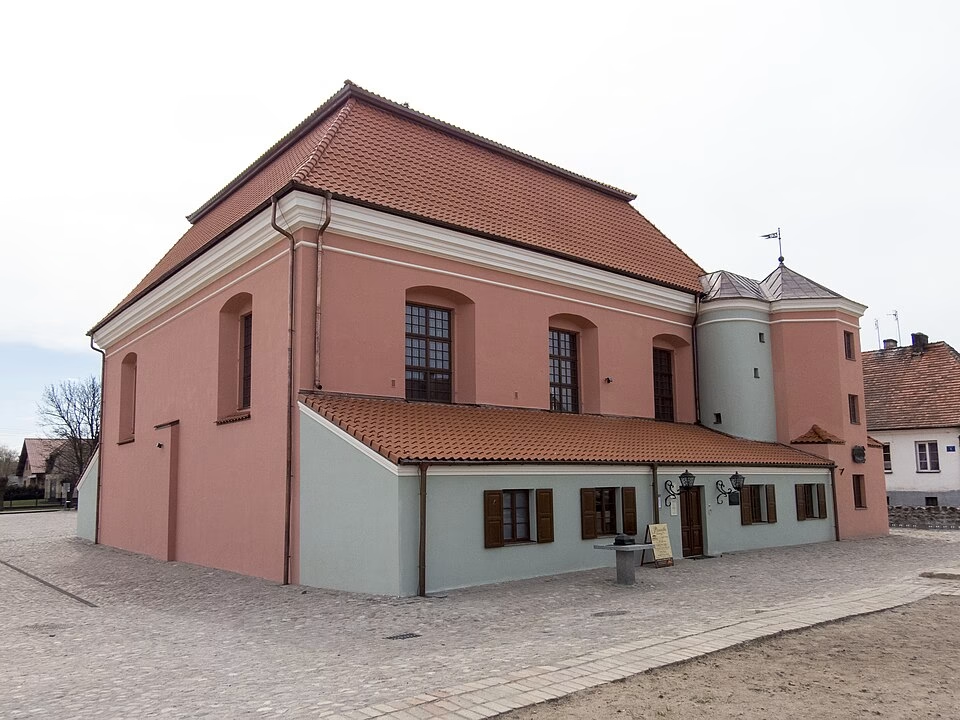
The Tykocin Synagogue, built in the 17th century, stands strong. It’s still a lovely example of early modern Polish synagogue architecture, even after the community’s tragic loss. It now functions as a museum that preserves the atmosphere of Jewish life as it once was.
Features that distinguish this synagogue include:
A Dramatic, Enclosed Bimah
The bimah (central platform) is surrounded by a decorative, almost fortress-like structure. Its striped arches remind us of medieval Spanish synagogues. This blend of styles is rare in Eastern Europe.
Magnificent Wall Paintings
Vivid inscriptions, floral designs, and symbolic motifs cover the walls. Wooden shtenders (lecterns) line up quietly. This shows a glimpse of the synagogue’s lively prayer life.
A Unique Aron Kodesh
The most striking feature is the Ark built into the wall. It has a painted “faux curtain” that looks like draped fabric. This artistic choice is dramatic and unusual. Unlike typical wooden or stone arks, it gives the synagogue a unique visual identity.
What Does the Synagogue Reveal About Tykocin’s Jewish Past?
Walking through this restored space is a quiet experience. It’s beautifully preserved, showing more than just architecture. It reflects:
- The community’s pride in its religious and cultural identity
- The sophistication of Jewish artisanship in Eastern Europe
- The intellectual life fostered by renowned rabbis and scholars
- A centuries-long story of resilience, creativity, and belonging
The synagogue reflects the vibrant Jewish life in Tykocin and the deep loss felt after its destruction.
Why Does Preserving Tykocin Matter Today?
As one of the last remaining structures tied to Tykocin’s Jewish past, the synagogue serves as:
- A historical archive
- A memorial to its vanished community
- A bridge connecting contemporary visitors to centuries of Jewish learning, faith, and craftsmanship
It stands not merely as a museum, but as a living testament to the Jewish story in Eastern Europe. Its rise, its vibrancy, and its tragic interruption.
Continue Your Journey Through Kosher Touring

Exploring our Jewish heritage helps us rediscover the strength, resilience, and traditions that have shaped our people for generations. To deepen this meaningful connection, consider experiencing history firsthand through Kosher Riverboat Cruises. You’ll enjoy the perfect blend of discovery, comfort, and community.

He is a scholar known for his sophisticated yet accessible lectures on Jewish history, watched by thousands of viewers daily on YouTube. The author of seven books on Jewish history and thought, he earned his PhD from the University of Toronto and held visiting and post-doctoral positions at Harvard, Cornell, Oxford and the Hebrew University of Jerusalem.