Wine has been important in Jewish life for thousands of years. It’s not just a drink; it has a sacred role in rituals and celebrations. Wine plays a key role in Jewish life. It is part of the blessing at every Sabbath. It is also central to life-cycle events like circumcisions and weddings. Wine is a vital part of the Jewish spiritual and cultural identity. Many Jewish children taste wine for the first time at eight days old. This happens during the Brit Milah, or circumcision ceremony. But when did Jews begin making wine, not just blessing it?
Discover Jewish Heritage in Comfort and Style with Kosher Cruises

Embark on a journey that nourishes both body and soul with Kosher River Cruises. Whether you’re a lifelong learner or simply looking to reconnect with your roots. An all-inclusive kosher cruise offers an enriching way to explore Jewish history. Enjoy the elegance and comfort of luxury accommodations, exquisite glatt kosher cuisine, and onboard amenities comparable to top kosher resorts. All while visiting destinations steeped in Jewish culture and tradition. Let this be more than a vacation. Let it be a meaningful and unforgettable Jewish travel experience.
Ancient Brewers, Emerging Vintners
Historically, Jews were not especially known for winemaking in ancient times. There’s more proof of Jewish beer brewers in Babylonia than winemakers. Around the 9th century, Jewish communities in Christian Europe started to stand out as vintners. Many people think Jews could not own land in medieval Europe, but that’s not true. They were allowed to own land in many places and did so—until it became too dangerous.
After years of antisemitic attacks owning land became a risky choice. Similar to the Crusades and blood libel claims in the 11th century. Jews feared sudden expulsion. So they shifted their focus from agriculture and land ownership, including vineyards.
Wine So Good, Even the Church Wanted It
Before this shift, Jewish winemakers in Europe had become known for the high quality of their wine. So much so that it was widely purchased by non-Jews. In fact, some of the loudest critics of this were church officials. Agobard of Lyon, around 825, criticized Christians for buying wine from Jews. Even Pope Innocent III was alarmed in the early 1200s. He noted that Jewish wine was used in Christian communion rites. If wine quality can win over even the most ideologically opposed buyers, you know it must’ve been good.
Meanwhile, Jewish vintners in Muslim lands managed to operate as well. Even if these places prohibited alcohol. Even with limits on what Muslims could consume, the demand for Jewish wine remained strong in those areas.
What Makes Wine Kosher?
Grapes and winemaking ingredients are kosher, unlike pork or shellfish. But kosher wine isn’t just about ingredients—it’s about ritual integrity. Jewish law, as discussed in the Talmud, prohibits wine that may have been used for idolatry. To keep wine pure, Jewish authorities made a rule. For wine to be kosher, only Jews can handle it during production.
This rule ensures the wine is not for any foreign god or religious practice outside Judaism. A wine can be “kosher” based on its ingredients. However, it also needs rabbinic supervision and Jewish handling to be ritually allowed.
From Producers to Merchants: The Shift in the 15th Century
By the 15th century, many Jewish communities switched from making wine to trading it. As owning land became riskier for Jews, they sought new chances in commerce. They especially focused on the trade of alcohol. In Central and Eastern Europe, the spotlight shifted to beer and spirits. This change came mainly from an economic deal called propinatia. Local noblemen allowed Jews to produce and sell alcohol. However, this came with high taxes.
This shift had a significant economic impact. In Poland, a 1765 census showed that about 15% of the Jewish economy came from alcohol trade. This included stronger spirits and beer, not wine.
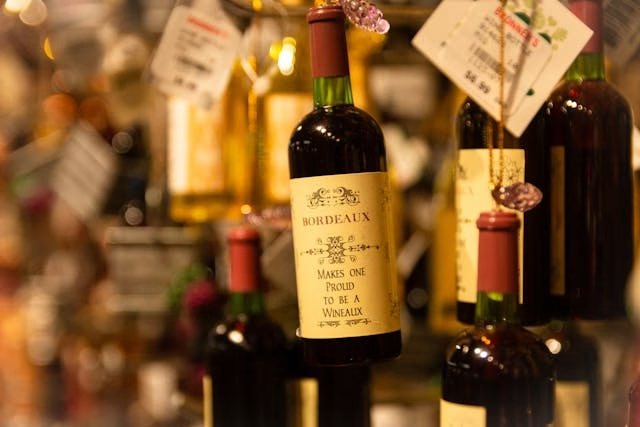
Bordeaux: A Jewish Presence, Not a Kosher Capital
Bordeaux is a famous wine region in southwestern France. Here, the Jewish presence goes back to at least the 15th century. However, while Jews lived and thrived in the area, there wasn’t a major boom in kosher wine production.
Bordeaux is famous for its fine wines. However, even with its deep Jewish roots, it never became a center for kosher winemaking. This likely happens due to limited land access, niche market demands, and a change in Jewish involvement in wine. They have moved from making wine to selling it.
Final Pour: A Legacy of Resilience and Refinement
The Jewish connection to wine reflects a broader story of adaptability and resilience. Jews have a long history with wine. This relationship goes from ritual use to business. It shifts from persecution to respect. Wine holds both spiritual and economic significance for them.
Today, kosher wine isn’t Bordeaux’s main export. Still, the story of Jewish involvement in wine shows how a people can keep their traditions alive while adapting to change.
Explore Your Jewish Heritage Aboard a Kosher Cruise with Kosher Riverboat Cruises

Exploring Jewish history deepens our connection to tradition, identity, and community. At Kosher Riverboat Cruises, we offer more than just travel. We create meaningful experiences that celebrate our shared heritage.
Set sail on a kosher cruise designed to bring Jewish history to life. All while enjoying the elegance and ease of kosher resorts at sea. Join us, and turn your next getaway into an unforgettable journey of discovery, culture, and connection.

He is a scholar known for his sophisticated yet accessible lectures on Jewish history, watched by thousands of viewers daily on YouTube. The author of seven books on Jewish history and thought, he earned his PhD from the University of Toronto and held visiting and post-doctoral positions at Harvard, Cornell, Oxford and the Hebrew University of Jerusalem.