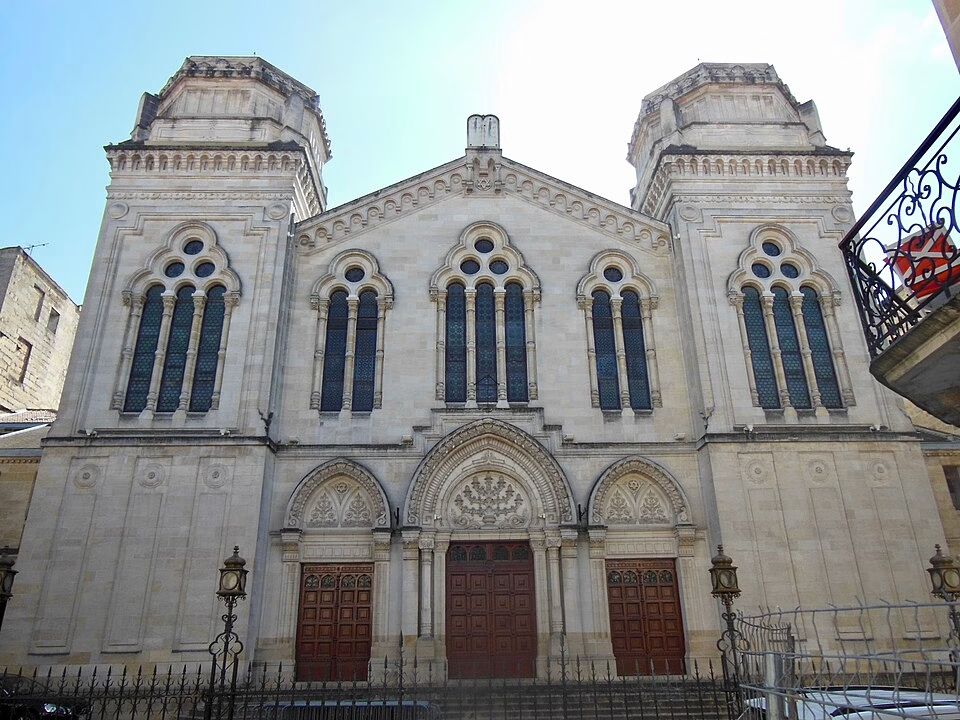
In the beautiful city of Bordeaux, there is a historic gem. It tells a story of Jewish resilience, tradition, and identity. The Bordeaux Synagogue is one of France’s largest. It gives visitors a unique look into its rich history. With Kosher River Cruises, guests explore this remarkable legacy.
From the outside, the synagogue captivates with its monumental structure and symbolic design. The menorah design appears on the outside wall and inside too. It sets the mood for what you’ll find: a holy space filled with beauty, sorrow, and lasting faith.
Discover Jewish Heritage in Comfort on a Glatt Kosher Cruise
Embark on an unforgettable journey with Kosher River Cruises. Where Jewish history, culture, and comfort come together. Our glatt kosher cruises offer enriching Jewish trips through some of the most historic and picturesque regions in the world. Enjoy elegant riverboat travel, gourmet kosher cuisine, daily minyanim, and inspiring excursions. It’s more than a vacation, it’s a meaningful experience you’ll cherish forever.
Built, Rebuilt, and Reborn
The original Bordeaux Synagogue was built in 1812, but its design has changed since then. A terrible fire in 1873 destroyed the synagogue. It was rebuilt in 1882, looking even more impressive than before. Its architecture proudly shows the Jewish community’s journey. From hiding for centuries to fully joining French society.
In the 18th century, Jews in Bordeaux started to reclaim their religious identity. Many were descendants of Portuguese crypto-Jews who had kept their faith secret for generations. When the current synagogue was built, Bordeaux’s Jewish community felt more confident and visible. They played a big role in Jewish emancipation in France and beyond.
A House of Worship Turned Prison
One of the most heartbreaking chapters in the synagogue’s history happened during World War II. The Nazis turned it into an internment site. 1,600 Jews were kept inside before being deported. Most were sent to Drancy and then to Auschwitz.
The synagogue’s role as a temporary prison is a tragic paradox. It was spared destruction precisely because it was used in this way. A plaque by the sanctuary honors those who were interned and never returned. It keeps their memory alive in the space they once occupied under such painful circumstances.
Architectural and Spiritual Grandeur
Stepping inside the sanctuary reveals a breathtaking space filled with symbolism and reverence. The bimah stands at the center. Long wooden pews surround it, filled with the scent of generations past. A large menorah stands inside, reflecting the one on the building’s front. It acts as a symbol of faith and continuity.
Above the Aron Kodesh hangs the Ner Tamid, the eternal light. Sunlight pours in from a skylight. It lights up the carvings of the Twelve Tribes of Israel. You can also see a full depiction of the Ten Commandments, not just a summary.
The women’s gallery circles above, accessed by elegant curving staircases. This space may be small, but it’s clearly used. Prayer books sit on the seats, and signs ask visitors to return them properly. The synagogue is busy. It holds regular services and has a strong community presence, especially on Shabbat and Jewish holidays.
Layers of Meaning and Memory
The sanctuary has many features, including an organ. This shows the complicated 19th-century discussions among European Jews about using music in Shabbat services. While Orthodox communities largely opposed such practices, Reform congregations welcomed them. The organ shows a time in Jewish history when modernity and tradition coexisted.
Another key item is the Kisei Eliyahu, or Elijah’s Chair. This chair is used in brit milah, which is a circumcision ceremony. It’s placed thoughtfully to honor the Jewish commitment to family and ritual.
Past Meets Present
A deeply moving contrast can be found at the synagogue’s entrance. On one wall, the memorial plaque commemorates Jews interned during the Holocaust. The main doors display recent photos of hostages in Gaza. They remind us of the ongoing struggles faced by Jewish communities worldwide.
This contrast highlights a simple truth: times change, but challenges often stay the same. The Bordeaux Synagogue is more than a historical site. It stands as a living testament to the strength and survival of the Jewish people.
A Meaningful Stop on a Journey Through Jewish Heritage
With Kosher River Cruises, a visit to the Bordeaux Synagogue is far more than a sightseeing tour. It’s an immersive experience in Jewish history, architecture, and culture. With guidance from Rabbi Moshe Tayeb, guests learn about Bordeaux’s Jewish community. They discover its unique identity, including its origins, challenges, and successes.
The synagogue shines as a symbol of Jewish life in France: lasting, graceful, and vital. It tells a story of repression turned recognition, of destruction followed by renewal. The Bordeaux Synagogue is a must-visit for anyone interested in Jewish heritage, history, and heart.
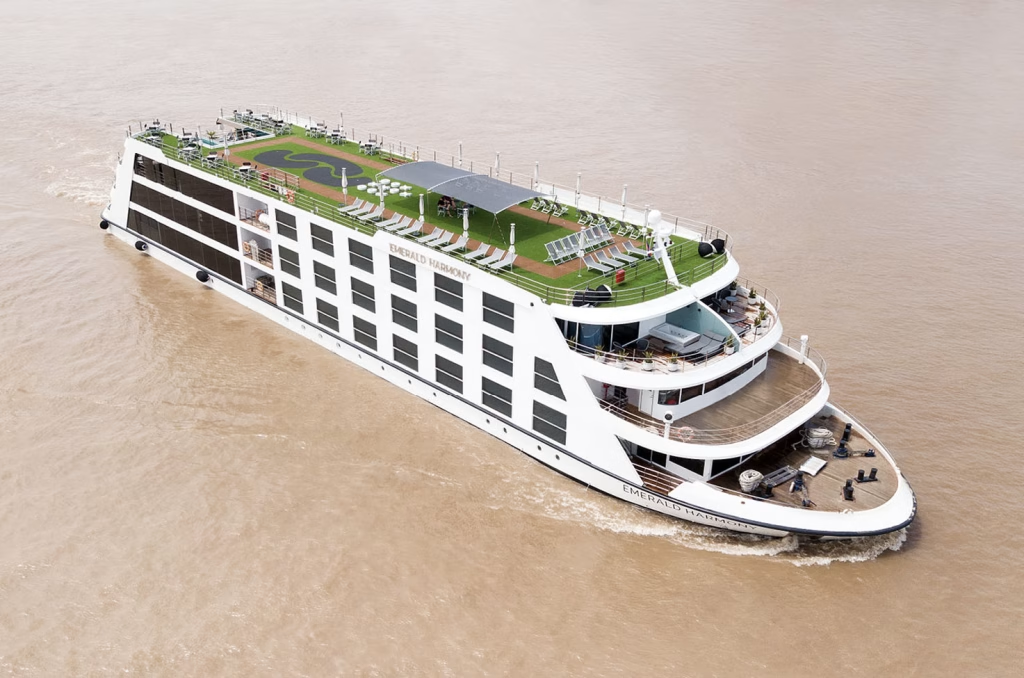
Discover Jewish History Aboard a Glatt Kosher Cruise
Exploring Jewish history deepens our understanding of identity, resilience, and tradition. At Glatt Kosher Cruises, we offer more than just Jewish trips. We provide immersive experiences that celebrate our shared heritage in comfort and style.
Join us on a kosher cruise where every destination reveals a chapter of our story. Every moment here is steeped in meaning, connection, and discovery.

He is a scholar known for his sophisticated yet accessible lectures on Jewish history, watched by thousands of viewers daily on YouTube. The author of seven books on Jewish history and thought, he earned his PhD from the University of Toronto and held visiting and post-doctoral positions at Harvard, Cornell, Oxford and the Hebrew University of Jerusalem.