The Exodus story is vital to Jewish history and tradition. It’s hard to know the exact route the Israelites took from Egypt to the Promised Land. How can today’s scholars and archaeologists piece together an event from over 3,000 years ago? This exploration examines the geography, archaeology, and history linked to this important journey.
Experience Jewish Heritage Beyond the Ordinary Through Jewish Tours
Jewish history is best explored through immersive experiences. Kosher river cruises offer a classy atmosphere. Guests can enjoy glatt kosher holidays, top kosher quality, and significant destinations. A well-planned Jewish tours provide a unique kosher vacation. It combines learning, tradition, and comfort.
What Was the Landscape of Ancient Egypt Like?
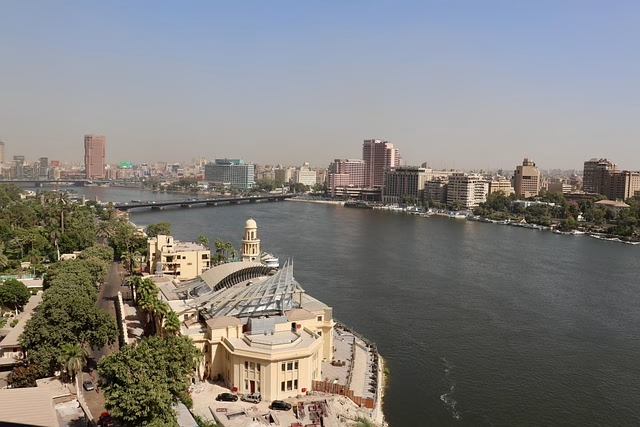
The geography of ancient Egypt plays a critical role in understanding the Exodus. The Nile River, flowing from south to north, dominates the region. Its fertile delta in the north was the site of the Jewish settlement in Egypt, known as Goshen. Archaeological finds show that settlements in the eastern Nile Delta align with biblical stories of Jewish labor and brickmaking.
Natural changes and human actions, such as the Aswan Dam built in 1970, have altered the delta’s water flow over time. This makes it hard to reconstruct historical geography. Some incredible archaeological discoveries have been made, like mud pits used for brickmaking. One find even showed the footprints of a child, likely four or five years old, highlighting the human side of labor in ancient Egypt.
How Did the Israelites Travel from Egypt to the Promised Land?
The Bible states that the Israelites avoided the direct route along the Sinai Peninsula coast. The Way of Horus, also known as the Philistine route, was the easiest path to Israel. They chose a longer, less direct path. They wandered through the Sinai Peninsula and finally reached Canaan.
This raises the question: which body of water did they cross? In Hebrew, the term used is Yam Suf, literally the “Sea of Reeds.” Unlike the Western conception of a sea as a large body of water, Yam could also refer to smaller lakes or wetlands. The word Suf (“reeds”) suggests marshy terrain rather than the Red Sea or Mediterranean Sea. Some historians link this crossing to the Bitter Lakes, which are wetlands in the eastern Nile Delta. Others suggest routes further south toward the Red Sea or north to the Mediterranean.
Where Was Mount Sinai Located?
The location of Mount Sinai, where Moses received the Ten Commandments, remains uncertain. Traditionally, Jebel Musa in southern Sinai has been identified as the biblical mountain. However, alternative theories place it in what is now Saudi Arabia. The exact path and places where the Israelites wandered are still uncertain due to a lack of clear archaeological evidence.
What Archaeological Evidence Supports the Exodus?
It’s hard to pinpoint exact sites along the Exodus route. However, there is strong evidence of a major migration into Israel in the 13th century BCE. Archaeologists have found:
- A sudden increase in settlements shows that migration, not just natural growth, is happening.
- Refuse pits without pig bones follow Israelite dietary laws. This is different from nearby Canaanite and later Roman sites.
- There is clear hostility toward Canaanite religious practices. This includes destroying altars and cultic idols. These actions match the stories found in the Bible.
These findings hint at a unique group from Egypt—probably the Israelites. They changed the region to reflect their culture and religion.
What Do We Still Not Know?
Despite these discoveries, many questions remain unanswered. Scholars still debate the exact path of the Exodus. They question the locations of specific camps and the route taken at the Sea of Reeds crossing. Natural changes over thousands of years, language issues, and a sparse archaeological record make clear answers hard to find.
Why Is Understanding the Exodus Important Today?
Reconstructing the Exodus offers more than just history. It enhances our grasp of Jewish identity, culture, and resilience. Studying geography, archaeology, and biblical texts helps scholars and enthusiasts see the deep journey from slavery to nationhood. This knowledge also enhances cultural experiences. For example, kosher heritage tours and educational trips along the Nile and Sinai give modern travelers a real link to ancient history.
The journey of the Israelites from Egypt to the Promised Land is a key story in Jewish history. Some details may remain unclear, but textual analysis and archaeological evidence help us understand this transformative time. It connects thousands of years of faith, culture, and human effort.
Bringing Jewish History to Life Through Jewish Tours
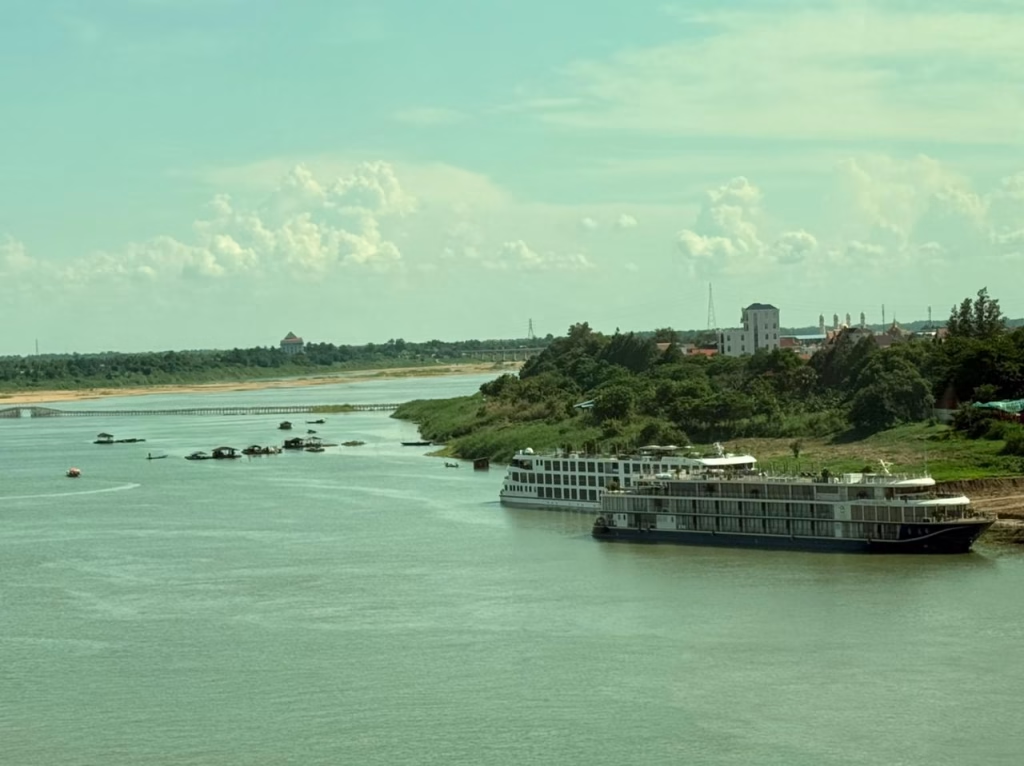
To wrap up our look at Jewish history, one truth stands out: you understand heritage best when you experience it. Curated Jewish tours let travelers explore historic Jewish landmarks in depth. Kosher river cruises offer a classy space. Here, learning, tradition, and discovery blend seamlessly.

He is a scholar known for his sophisticated yet accessible lectures on Jewish history, watched by thousands of viewers daily on YouTube. The author of seven books on Jewish history and thought, he earned his PhD from the University of Toronto and held visiting and post-doctoral positions at Harvard, Cornell, Oxford and the Hebrew University of Jerusalem.